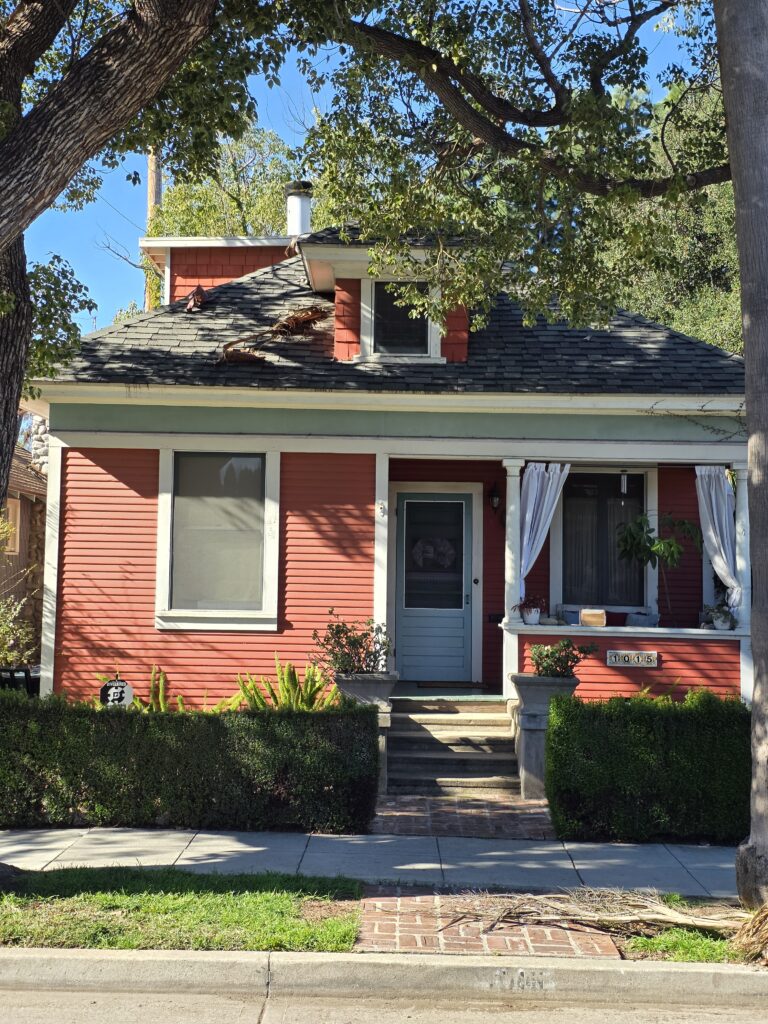

Los Angeles has long been one of the most dynamic and sought-after real estate markets in the United States. With rising property prices, limited housing supply, and a constant influx of renters and buyers, the city presents both challenges and top duplex opportunities Los Angeles buyers can leverage for long-term wealth. For those looking to enter the market strategically, a duplex stands out as one of the most powerful tools for building rental income and financial stability. Unlike single-family homes, duplexes offer dual income streams, owner-occupant flexibility, and financial advantages that make them especially compelling in a competitive urban environment. Whether you aim to buy your first property or expand your portfolio, understanding the 10 reasons to buy a duplex in Los Angeles can unlock opportunities that traditional purchases often miss.
A Los Angeles duplex investment is more than a real estate transaction—it is a proven wealth-building strategy. Duplexes allow buyers to house hack Los Angeles, living in one unit while renting the other to offset mortgage costs, boost rental income, and accelerate equity growth. They also provide resilience against market shifts by combining appreciation with consistent cash flow. While rent control and tenant legacy concerns may initially seem like obstacles, they often create undervalued acquisition windows for informed buyers. In the sections ahead, we break down the top 10 reasons to buy a duplex in Los Angeles now, highlighting how these properties can generate income, reduce housing costs, and serve as a long-term wealth engine in one of the nation’s strongest rental markets.
A defining advantage of owning a duplex is the inherent income redundancy. Unlike single-family homes, where a vacancy immediately halts cash flow, duplexes offer a built-in buffer. Even if one unit becomes vacant, the other unit often generates enough income to cover a substantial portion of operating expenses. In a high-cost city like Los Angeles, this structural risk protection can make a significant difference for both investors and owner-occupants.
Consider a duplex in West Adams renting for $2,500 per unit. If one tenant moves out unexpectedly, the remaining unit’s rent can still cover property taxes, insurance, and a significant portion of the mortgage. This safety net allows owners to navigate vacancies, maintenance issues, or unexpected financial changes without immediate distress. For owner-occupants living in one unit, the rent from the second unit can offset 50–70% of their housing costs, dramatically reducing personal financial strain. For investors, dual income streams often translate into better loan terms, lower perceived risk by lenders, and higher resale appeal.
Neighborhood dynamics in Los Angeles further enhance this benefit. Areas such as Echo Park, Silver Lake, and West Adams maintain high rental demand, resulting in brief vacancies and consistent cash flow. The two-income structure also enables conservative planning. Applying frameworks like the 50% Rule—which assumes that roughly half of rental income will go toward operating expenses—allows buyers to stress-test cash flow projections, ensuring the duplex remains profitable even during periods of vacancy or market fluctuation. For anyone considering buying a duplex in Los Angeles, the dual income stream is a foundational pillar of both safety and long-term financial growth.
House hacking Los Angeles allows buyers to occupy one unit of a duplex while renting the other, transforming what would normally be a personal expense into a vehicle for wealth creation. By letting tenants cover a significant portion of the mortgage, house hacking reduces personal housing costs and enables owners to build equity faster. In a city where single-family home prices routinely exceed $900,000, this strategy offers both financial and lifestyle advantages.
Here’s how it works: you purchase a duplex, live in one unit, and rent the second unit. Tenant income covers your mortgage, property taxes, and insurance, and in many cases, leaves you with additional positive cash flow. For example, an Echo Park duplex purchased at $950,000 might have a monthly mortgage of $4,000. Renting the second unit for $2,500 reduces the homeowner’s out-of-pocket housing cost to just $1,500 per month, far below comparable single-family rentals in the area.
Beyond immediate savings, house hacking positions buyers to leverage their first property into a broader portfolio. A Silver Lake duplex purchased for $1.1 million, with the upper unit owner-occupied and the lower unit rented for $3,000, can allow refinancing after two years to pull $150,000 in equity for a second duplex. This strategy creates a compounding effect: tenant income covers costs, equity grows through appreciation, and capital can be recycled into additional properties, all while the owner enjoys reduced living expenses. House hacking also offers tax advantages, as depreciation can be applied to the rental unit even while living in the other, lowering taxable income and improving cash-on-cash returns.
A Los Angeles duplex investment benefits from dual appreciation: traditional market appreciation and income-driven growth. Unlike single-family homes, where value is tied primarily to location and market trends, duplexes can increase in value through rent increases, operational efficiencies, and strategic upgrades. This makes them exceptionally attractive in a city like Los Angeles, where rental demand remains strong and property prices continue to rise.
For instance, a duplex in Koreatown renting at $2,000 per unit could undergo renovations that increase rent to $2,400 per unit. This additional $400 per month per unit adds $9,600 annually in net operating income (NOI). Because property value for income-generating real estate is often calculated as a multiple of NOI, this income increase could raise the property’s market value by over $100,000. For investors, understanding this potential is critical: the current rent often understates the true value of the property.
Neighborhood selection amplifies this effect. Areas like West Adams, Silver Lake, and Echo Park have strong rental demand, meaning that even modest unit upgrades—modernized kitchens, updated bathrooms, and improved landscaping—can quickly justify higher rents. Owner-occupants also benefit, as living on-site allows careful management of renovations and tenant turnover. Income-driven appreciation is a key reason why a Los Angeles duplex investment can outperform single-family homes in terms of total returns over time.
The 50% Rule is a widely used guideline in real estate investing: approximately half of rental income typically goes toward operating expenses. In Los Angeles, where property taxes, insurance, and maintenance are higher than average, this rule ensures that buyers remain conservative in their financial planning. Applying this rule prevents overestimating cash flow and ensures the investment remains profitable even under challenging conditions.
Typical expenses include property taxes (1–1.25% of the purchase price), insurance ($1,500–$3,000 annually), repairs and maintenance (5–10% of rent), capital improvements (2–5%), and vacancy or property management costs (5–10%). For a duplex generating $5,000 per month in gross rent, the 50% Rule suggests that $2,500 will go to expenses, leaving $2,500 to cover the mortgage and produce cash flow.
Owner-occupants can use the 50% Rule to plan for conservative budgeting, ensuring that tenant income reliably offsets personal costs. Investors rely on it to stress-test potential acquisitions, particularly in neighborhoods with older properties or legacy tenants. This guideline, combined with the dual-income structure of a duplex, ensures both safety and long-term profitability.
Many buyers hesitate to purchase a rent controlled duplex Los Angeles because of perceived limits on rent increases. While it’s true that LA’s rent control caps annual increases for existing tenants, these regulations do not prevent long-term wealth creation. Smart buyers view rent control not as a restriction but as a strategic tool to purchase properties below market value.
For example, a duplex in West Adams may have long-term tenants paying $1,800 per unit while comparable market rents are $2,500. This creates an immediate arbitrage opportunity for buyers willing to plan ahead. Over time, as tenants turnover or as units are renovated, rents can align with the current market, significantly increasing NOI and property value. Even modest rent adjustments of $50–100 per month, compounded annually, can yield thousands of dollars in additional income over several years.
Investor strategies include using cash-for-keys to voluntarily buy out legacy tenants, upgrading units selectively, and timing rent resets with tenant turnover. Owner-occupants benefit similarly: they can house hack by living in one unit while gradually unlocking rental growth in the other. Rent control is a tool, not a barrier, and savvy buyers who understand its nuances can convert these properties into high-performing, income-generating investments.
Cash-for-keys is a proven strategy in LA to legally accelerate tenant turnover and maximize rental income. Many duplexes sell below market because legacy tenants occupy units paying below-market rents. Offering tenants a one-time incentive to vacate voluntarily can unlock significant value without lengthy evictions.
Consider an Echo Park duplex where a tenant pays $1,500 per month. Offering $5,000 cash-for-keys can encourage a voluntary move-out, allowing the unit to be rented at $2,500 per month. The one-time buyout cost is recouped in under a year through additional rental income. This tactic is especially effective in rent controlled duplex Los Angeles, where long-term tenants may otherwise limit income potential.
From a financial planning perspective, including cash-for-keys as part of acquisition strategy ensures that investors are evaluating the true potential NOI, not just the current cash flow. Owner-occupants can also benefit, as they live in one unit while planning strategic improvements or tenant transitions in the second.
Properties with legacy tenants often sell at prices below their intrinsic market value. While this may seem risky to some buyers, it creates opportunity for savvy investors and owner-occupants. Understanding that these units can eventually reach market rent allows buyers to purchase at a discount and realize significant appreciation.
For instance, a West Adams duplex might list at $950,000 with tenants paying $1,600/unit. Market rents for similar units in the area could be $2,200/unit. Purchasing at this discounted price and planning gradual rent increases or renovations unlocks hidden equity. Areas like Silver Lake and Koreatown consistently feature these types of opportunities, where investor hesitation creates a market inefficiency.
Owner-occupants can also benefit: by living in one unit, they reduce risk while gradually unlocking value in the second unit. Investors who understand post-turnover NOI can turn a property that initially seems modest into a high-performing asset, enhancing both cash flow and long-term appreciation.
A Los Angeles duplex investment is not just about rental income—it’s also about strategic tax planning. Duplexes offer multiple deductions that improve cash-on-cash returns and accelerate wealth-building over time.
Key benefits include:
For example, a $950,000 duplex with $900,000 allocated to building value may allow $30,000–$35,000 annual depreciation deduction. Combined with other operating expense deductions, taxable rental income could be minimal, even if cash flow is strong. Owner-occupants living in one unit can apply these deductions to reduce taxable income while the rental unit continues generating positive cash flow.
Tax advantages like these are particularly valuable in high-income brackets, allowing investors to reinvest savings into additional duplexes or renovations. Over decades, these deductions can compound into substantial financial gains, demonstrating why tax strategy is a core component of Los Angeles duplex investment planning.
Duplexes offer financing options that single-family homes rarely provide, blending owner-occupied loan benefits with investment leverage. Buyers can access FHA or VA loans with as little as 3.5% down while still generating rental income, lowering initial financial barriers.
Consider a Silver Lake duplex purchased with FHA financing. Tenant rent covers $2,500 per month, reducing the owner’s out-of-pocket expenses. After three years, rising property values allow refinancing and pulling $150,000 in equity for a second duplex acquisition. This approach allows buyers to scale quickly and strategically, increasing net worth while mitigating financial risk.
Owner-occupants benefit by accessing lower interest rates than traditional investment loans, while investors gain the ability to recycle capital efficiently. The flexibility of duplex financing, coupled with rental income and strategic planning, makes duplexes a uniquely powerful tool for wealth-building in LA’s competitive market.
Duplexes occupy a critical niche in LA’s “missing middle” housing—units that are in demand but rarely built. Structural demand is fueled by limited land, population growth, and chronic housing shortages. Unlike cyclical markets that fluctuate dramatically, duplexes provide long-term stability and appreciation potential.
Neighborhood insights highlight this structural advantage: West Adams features historic charm with strong long-term growth; Echo Park attracts young professionals with low vacancy rates; Silver Lake offers stability and high tenant retention; Koreatown provides dense population and consistent investor interest. Owning a duplex in these neighborhoods allows buyers to capture cash flow while benefiting from enduring market fundamentals.
For investors, duplexes combine multi-family income stability with owner-occupied financing advantages. For owner-occupants, they offer the opportunity to live in a desirable area while gradually building equity through rental income, appreciation, and strategic property management. In essence, duplexes provide a low-risk, high-opportunity entry point into LA’s otherwise expensive housing market.
To get the most out of a Los Angeles duplex investment, consider these actionable strategies:
By integrating these strategies with the top 10 reasons, buyers can maximize returns, minimize risk, and build lasting wealth. Duplexes in Los Angeles are not just real estate purchases—they are strategic financial tools for both current income and future security.
Buying a duplex in Los Angeles now represents a unique opportunity to combine income stability, strategic financial leverage, and long-term wealth creation. Dual income streams reduce risk, house hacking Los Angeles lowers personal housing costs, and income-driven appreciation allows investors to unlock hidden property value. Even with rent controlled duplex Los Angeles regulations, strategic approaches like tenant turnover, cash-for-keys, and selective renovations allow owners to increase NOI and property value over time.
Tax advantages, financing flexibility, and structural demand make duplexes one of the few assets capable of delivering both near-term cash flow and long-term appreciation. For owner-occupants, they offer affordability and equity growth. For investors, they provide scalable, predictable income in a market with limited housing supply. Now is an ideal time to take advantage of these dynamics while interest rates and property values remain favorable relative to historical trends.
Based on information from the / Association of REALTORS® (alternatively, from the /MLS) as of [date the AOR/MLS data was obtained]. All data, including all measurements and calculations of area, is obtained from various sources and has not been, and will not be, verified by broker or MLS. All information should be independently reviewed and verified for accuracy. Properties may or may not be listed by the office/agent presenting the information.